

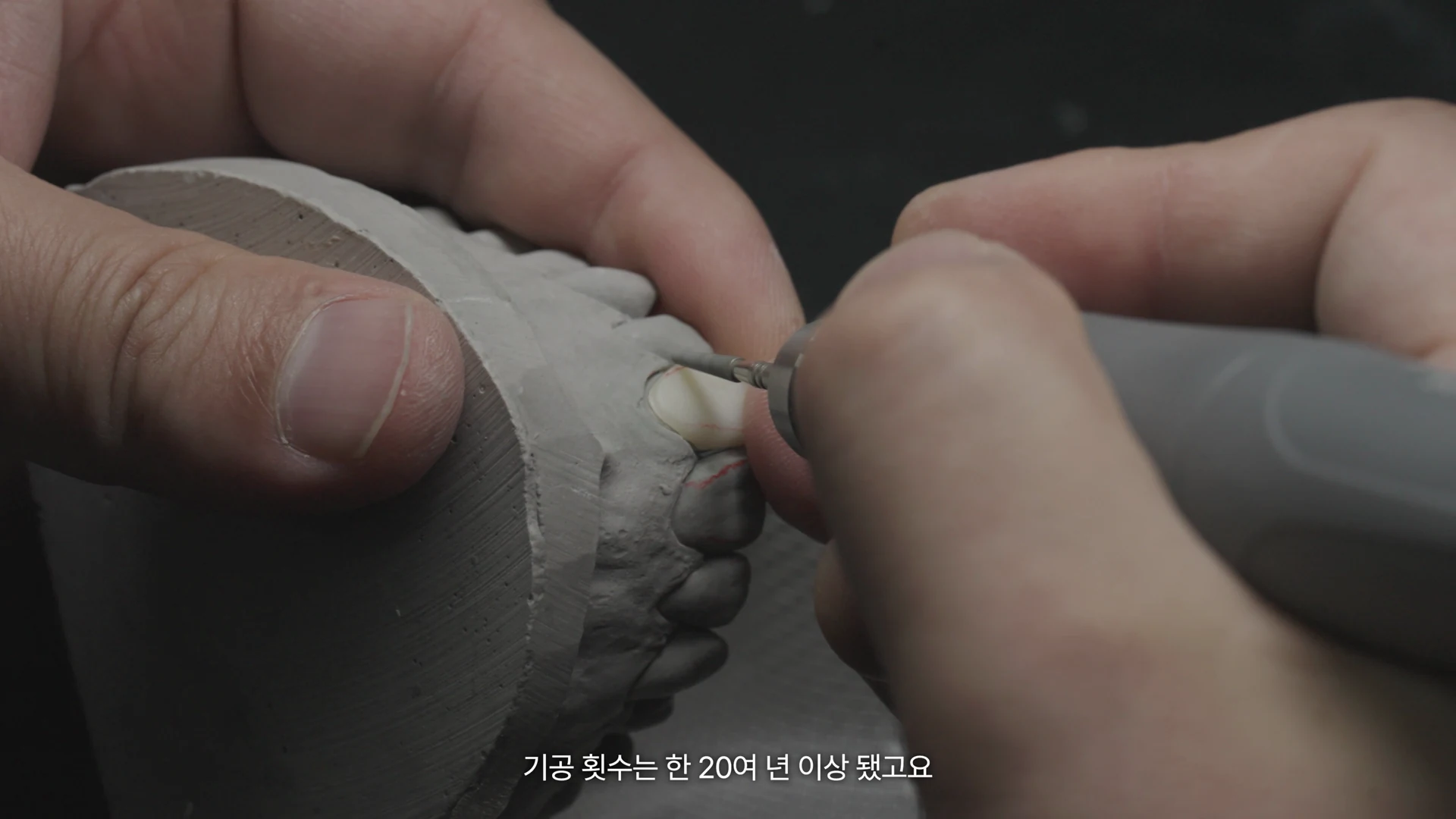
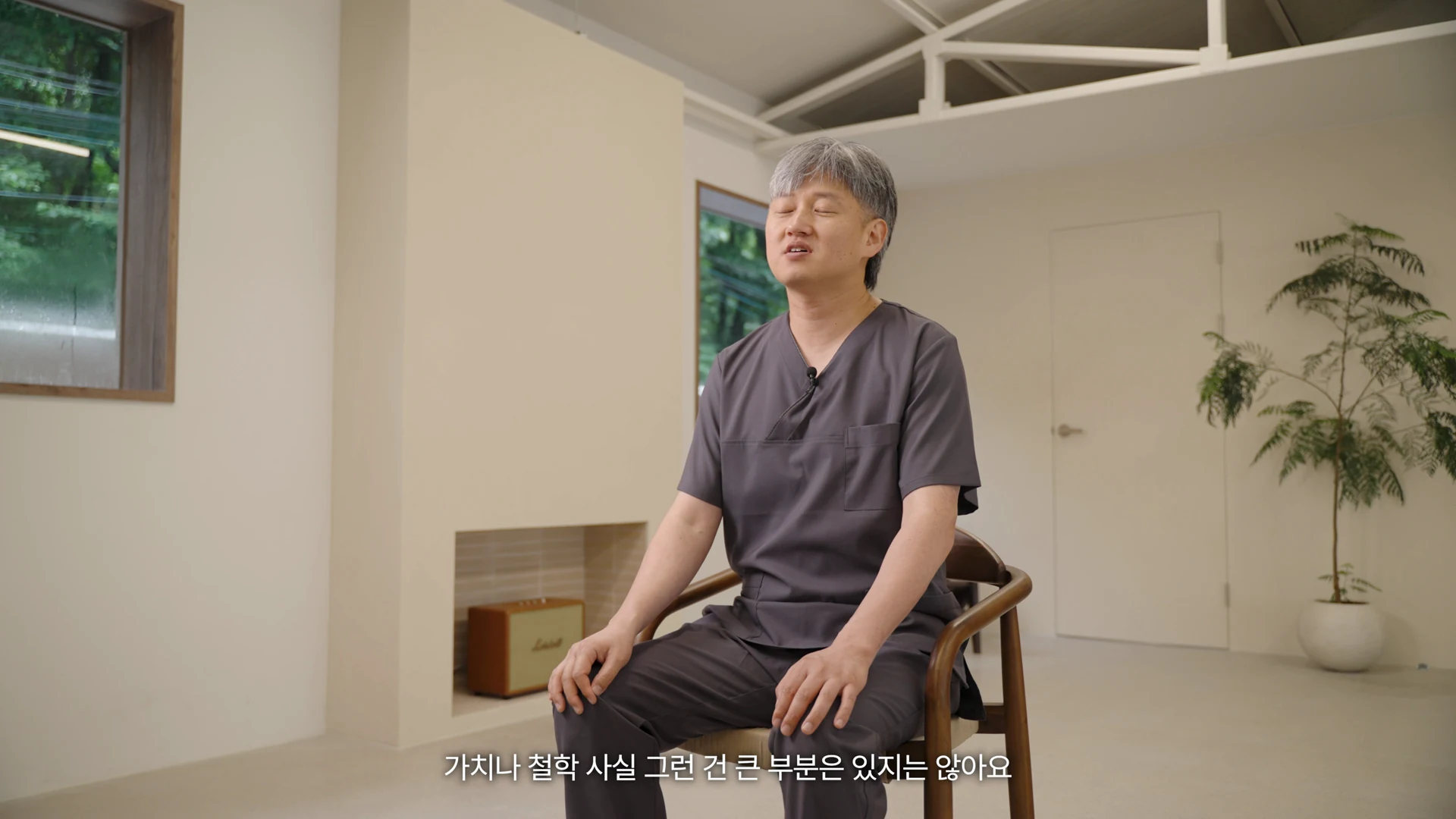
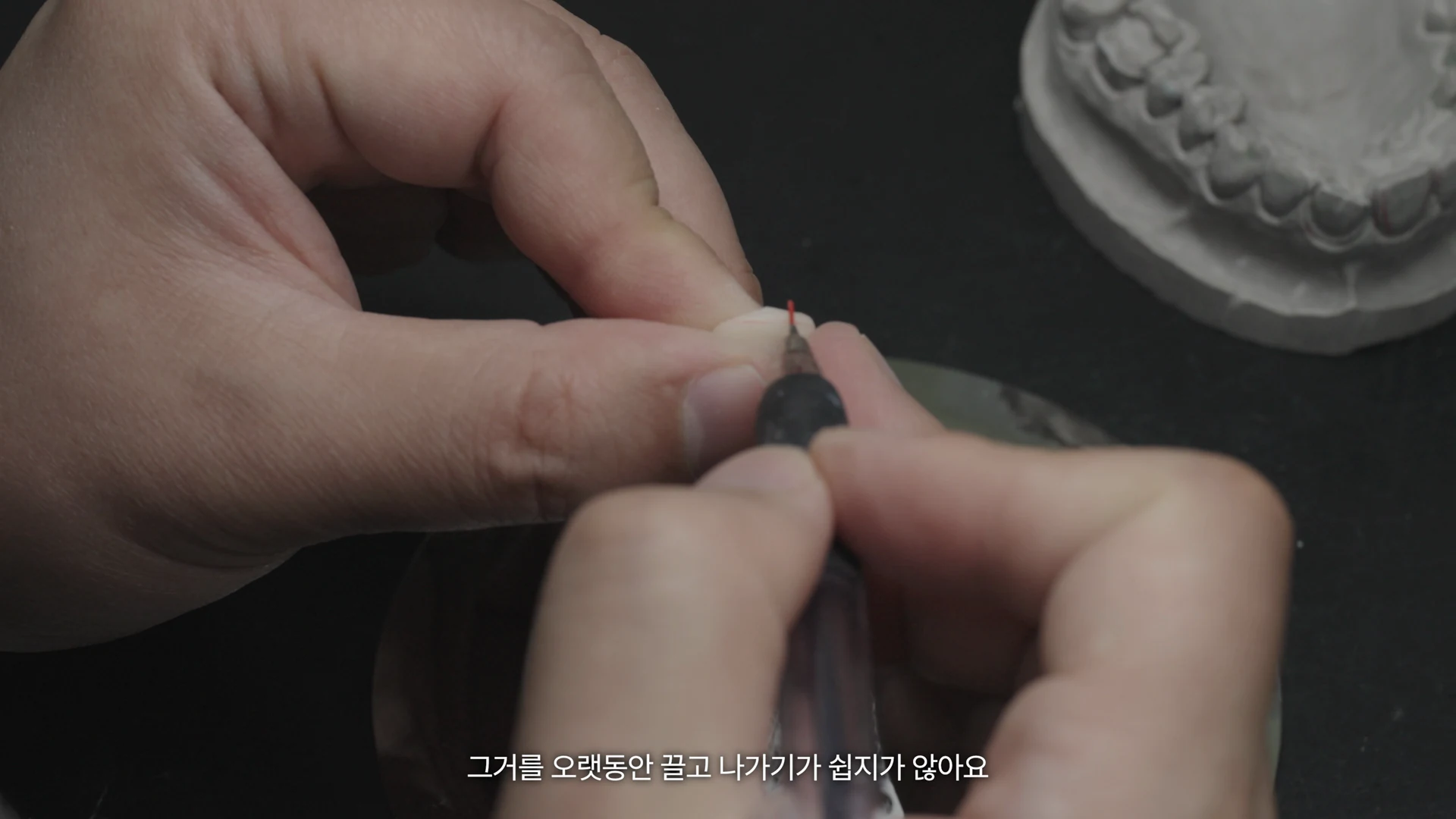
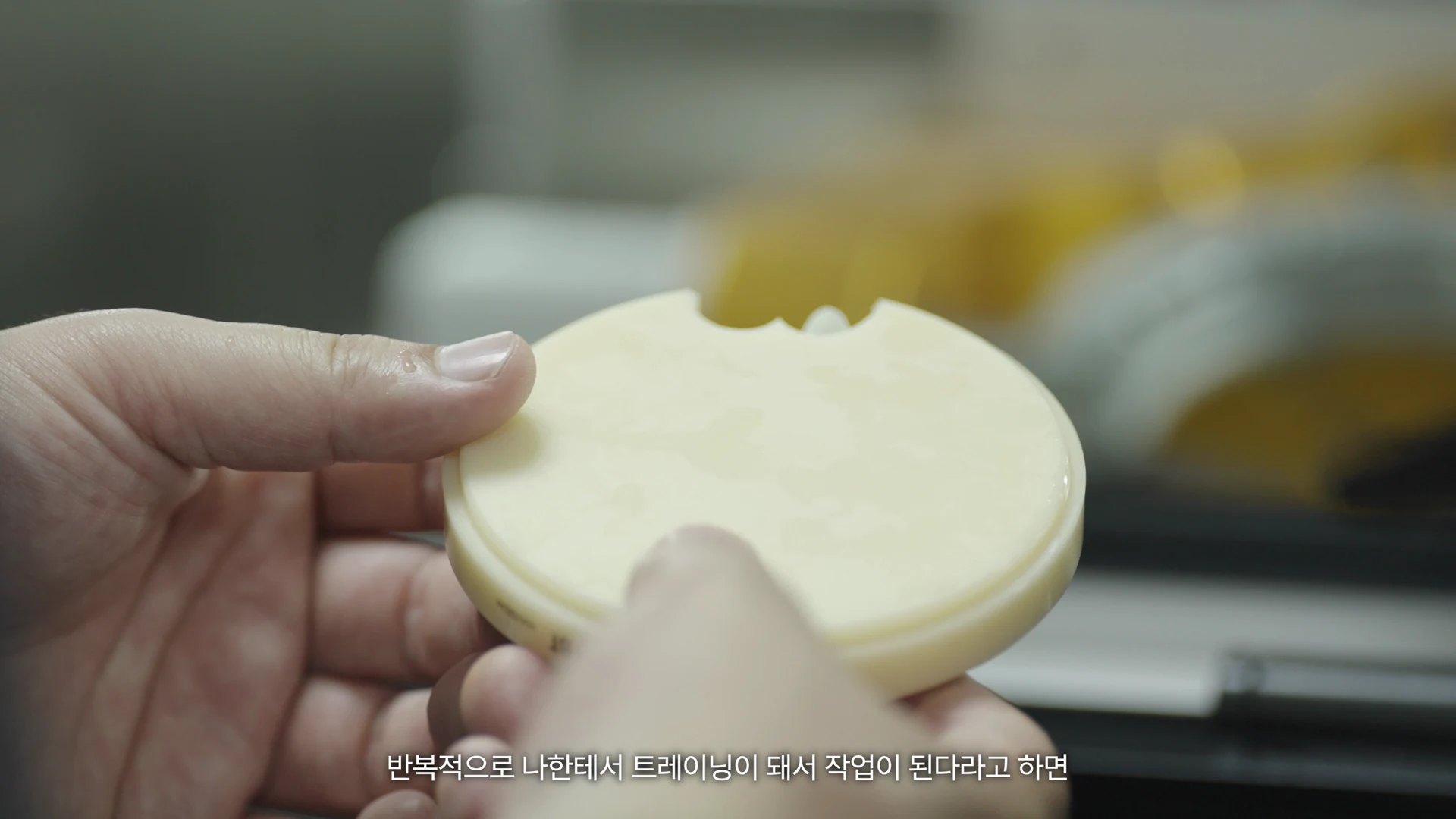
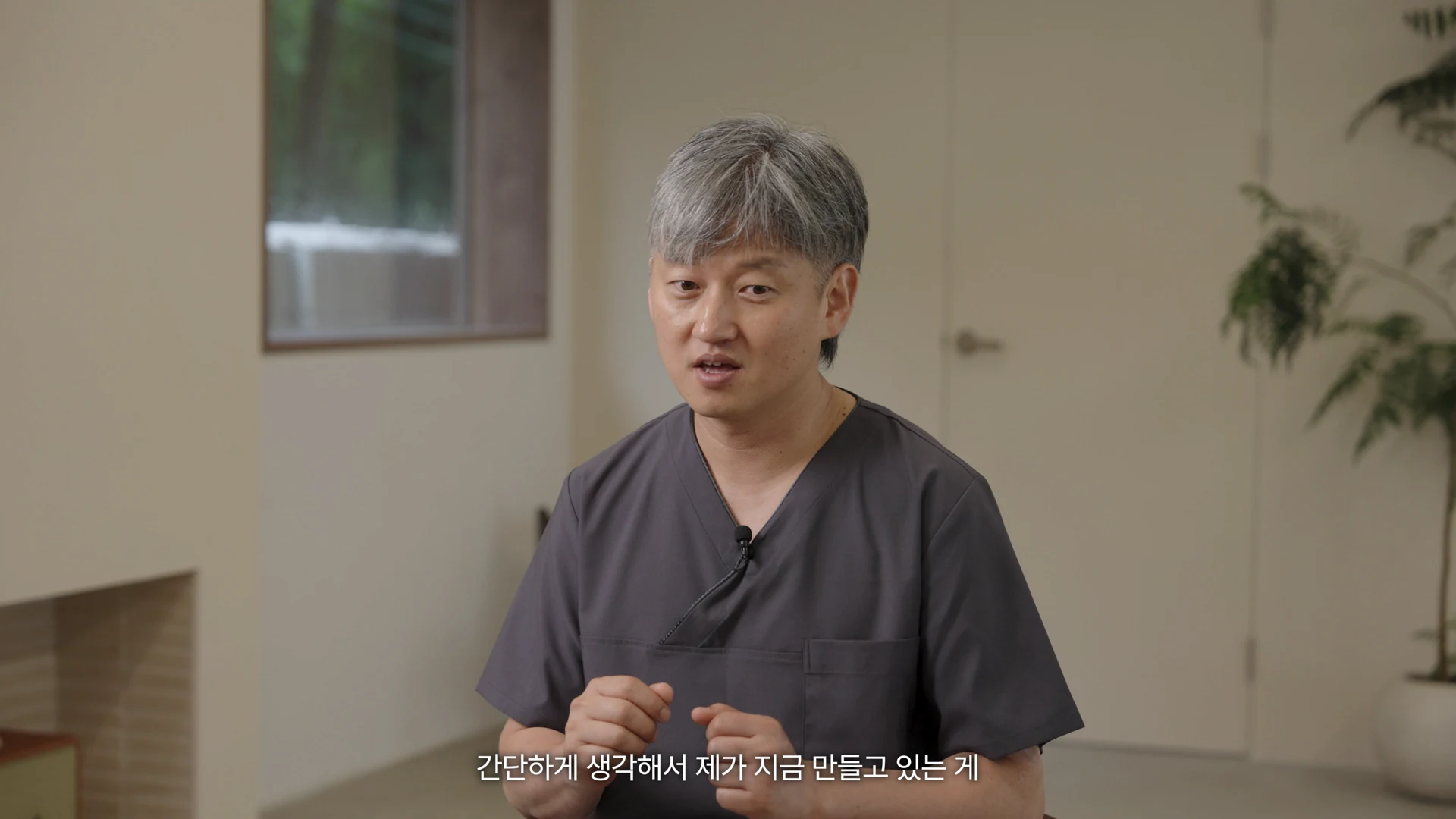
This feature helps patients understand the person and work behind a restoration. Scenes from the brand film follow laboratory manager Kim Byeonghee at his workbench, handling tools and checking a model, alongside his own account of the work. [1]
Working as though it were for his own mouth
Kim describes working as though the restoration were for his own mouth. His remarks concern personal standards and learning through repetition. Seen alongside the work scenes, the interview gives context to the person handling the tools. [1]
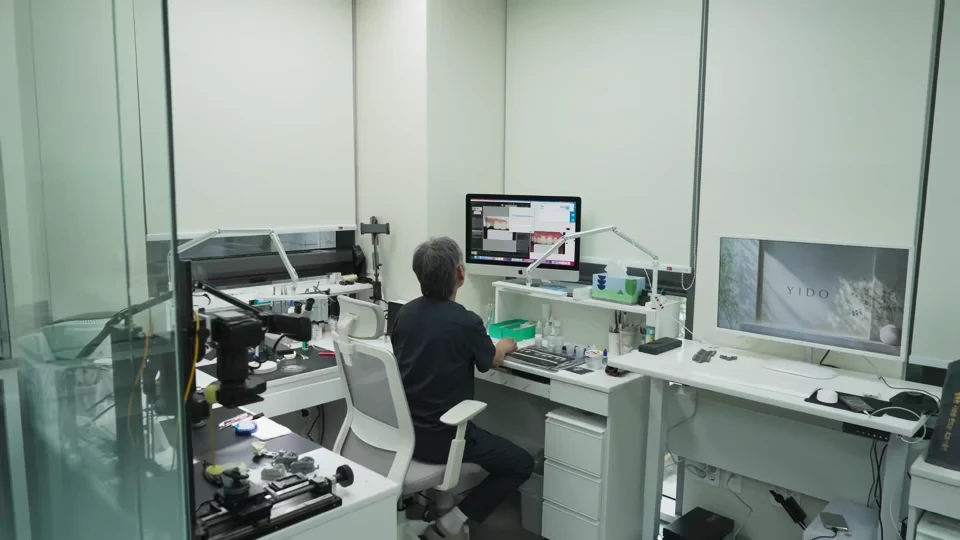
From the workbench to the model
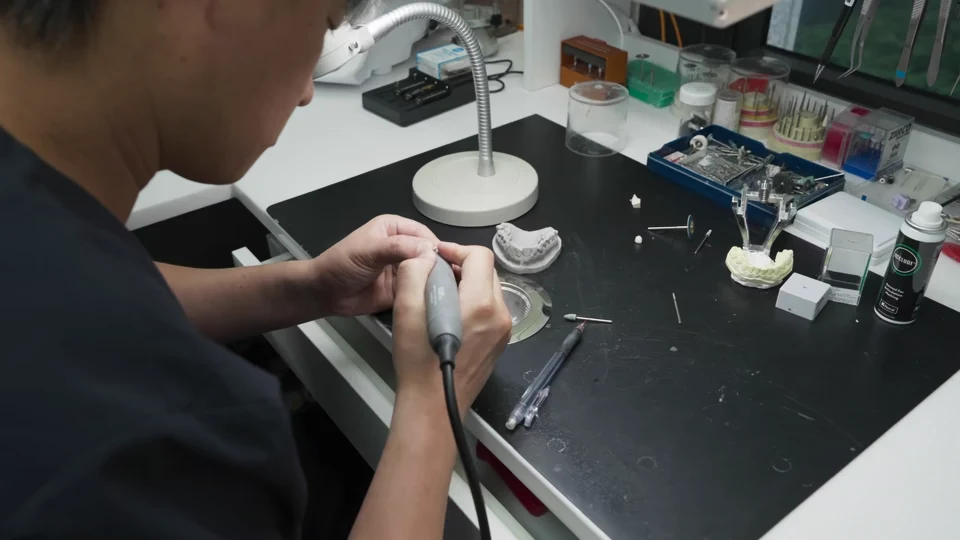
Look for the workbench at 02:53, tool handling at 02:58, close handwork at 03:24, interview views at 03:27 and 03:34, and a model check at 03:47. The photographs come from different moments to show several aspects of the work. [1]
Connecting the work with your consultation
After seeing the laboratory, ask which steps are relevant to your treatment. Describe appearance and chewing concerns separately, and ask what information is shared for fabrication and what will be checked afterwards.
A Different Kind of Focus at the Laboratory Bench
In the in-house dental laboratory, you can observe different types of focused work compared to the examination room where the dentist interacts with the patient. The act of holding and examining a model, or manipulating small parts with instruments, reveals the intricate process of creating a prosthetic that is not easily understood from a single photograph. The looping clips and photos included here capture different moments of this process. Instead of showing the same scene repeatedly, they are organized to allow you to focus on specific aspects, such as the work space, the movements of the hands, and the angle of examining the model. When viewing the scene, pay attention to what the person is examining rather than immediately looking for the names of sophisticated machines or tools. Chief dental technician Kim Byunghee’s approach to work, can be understood by connecting them to the movements of their hands and eyes. [1]
Making a Restoration as Though You Would Use It Yourself
In the interview, chief dental technician Kim Byunghee describes treating a restoration as something that would go into his own mouth. The idea brings the person who will use it into view, beyond the shape of the finished piece. Patients live with a restoration while eating, talking and cleaning their teeth, so understanding its manufacture connects with everyday life. After reading the interview, consider how you would describe the appearance you hope for and any difficulties you have experienced. If you have used a restoration before, explain what worked well and what bothered you. Listening to the maker’s perspective can lead to questions that help you describe your own needs more clearly. Ask the dental team to explain the fabrication steps relevant to your examination and individual plan. [1]
Questions to Consider When Observing a Model
The scene of observing the model raises questions about how information about a patient’s mouth is checked during fabrication. Patients can inquire about the records they prepare for their treatment and the information they provide for fabrication. If photos or records are used, ask for clarification on what information is being verified. Patients can also ask about how their desired outcome is reflected in the records and when it would be appropriate to provide additional information. While this article does not necessarily mean that the model and work scene are the same for all patients, it can serve as a starting point for understanding the process behind the prosthetics. If you encounter unfamiliar terms during a consultation, try to understand their function in your own words rather than simply memorizing them.
Communicating Desired Colors and Shapes
When discussing desired colors and shapes with a dental professional, be sure to specify which parts of the reference materials you are focusing on. Are you drawn to the overall atmosphere of the photo, or to the specific length or shape of a particular tooth or edge? If you have your own photos, explain which aspects concerned you in certain scenes. Instead of using different photos as a standard for color, ask the professional what specific aspects you are looking to confirm during the consultation. If you have multiple desired features, prioritize the most important ones first, and then consider how they relate to the range of options discussed during the examination. Showing interest in the creation process can begin by preparing materials and phrases that accurately convey your preferences, rather than simply learning the technical terminology used by professionals.
Understand the Restoration and Its Fabrication Together
The word “restoration” can refer to different plans depending on an individual’s condition. The ADA explains that crowns can cover teeth to restore their shape and function or protect weakened teeth. If the laboratory scenes have prompted an interest, first ask which restoration has been proposed for you. What problem does it address, why is that approach recommended, and what should you know about its material and care? Knowing many names of tools and materials does not by itself mean understanding a plan. Ask the dental team to explain the role of each step in your own treatment. Connect what you see in the in-house work space with the information you need during a consultation. [2]
Determine the Timing and Content for Each Check-up
When checking the prosthesis before and after fabrication, ask what information would be helpful to discuss. During the initial consultation, you can share your desired changes and previous experiences. Afterwards, you can discuss how you perceive the results and your experience based on the explanation provided. The timing and specific aspects to check should be determined in consultation with your treatment plan. If your schedule is tight, communicate the reasons in advance and discuss how to plan the necessary checks. Instead of assuming that all prostheses are completed on the same day because there is a dental lab on-site, it is better to directly confirm the expected stages and number of visits. Instead of simply listing scheduled appointments, it is helpful to record the purpose of each visit and any remaining topics to discuss, which makes it easier to understand how the fabrication and treatment process are connected.
Post-Treatment Patient Care
After the prosthetic is completed, attention shifts to the patient's ongoing care and maintenance. This includes learning how to properly clean and care for the prosthetic, knowing how to contact the dentist or technician if any issues arise, and understanding the schedule for follow-up appointments. If you encounter difficulties with the care process, it's important to clearly communicate which aspects are causing problems and request further explanation. It's more important to understand what you need to do in your daily life to maintain the prosthetic than simply remembering the name of the materials or the manufacturing process. If you notice any changes in how the prosthetic feels, record the location and situation and communicate this to your dentist. It's generally best to avoid making assumptions about the cause or attempting to fix the problem yourself. While observing the dental technician’s precise handwork and understanding your own care methods are different pieces of information, they are both important for understanding how the prosthetic works.
Why Look Closely at the Maker’s Work?
Instead of focusing solely on the final result, as shown in a single photograph, consider the story behind the case. Think about who created the result, what steps were taken, and what information the patient received. After listening to the interview for the brand film, take your time to examine the scenes described in this article. You can note down any questions you have as you observe the scenes where hands are moving and models are being examined. Furthermore, during consultations, ask about the specific steps that align with your own plan. The purpose of this content, which introduces the in-house dental laboratory, is to find the point where the maker’s standards and the patient's questions meet. When the impression of the work process leads to a deeper understanding of the actual treatment, you can better understand the people and processes behind the prosthetic.
Q. Does an in-house laboratory mean same-day completion?
The film shows work and an interview; it does not establish the production time for an individual case. Ask about the expected stages, number of visits and timing for your restoration.
Q. What should I ask during a restorative consultation?
Ask about the recommended approach and alternatives, material differences, checks after fabrication, everyday care and follow-up. The aim is to turn an introduction to the laboratory into questions that help you understand your own care.
References and sources
- Seoul Yido Dental Clinic · Brand film · Doctor interviews and key remarks (opens a new tab)
The clinic’s brand film, featuring clinician and laboratory lead interviews and scenes inside Seoul Yido.
- American Dental Association · Crowns (opens a new tab)
An introduction to crowns used to cover teeth, restore their shape or protect weakened teeth.